

Why Access Isn’t the Same as Capability
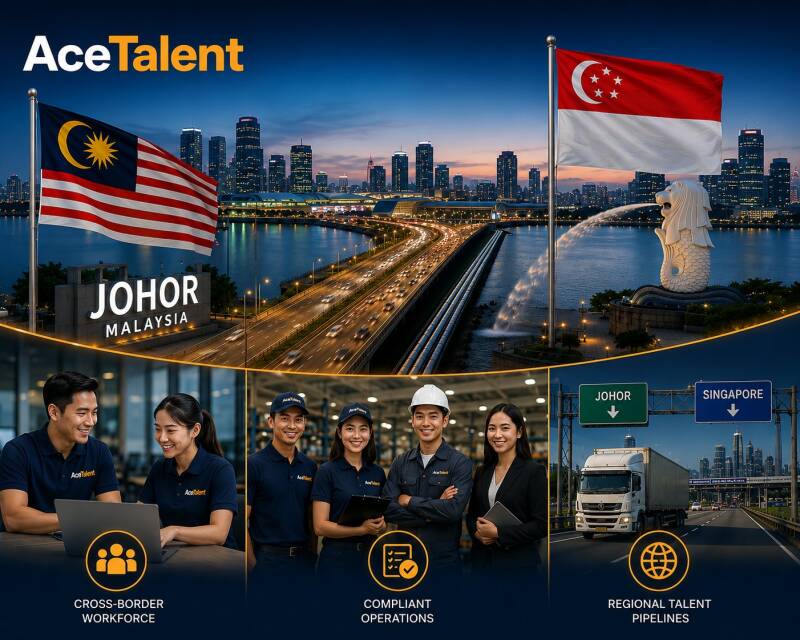
Southeast Asia doesn't have a shortage of people. But having access to people and having the workforce capability to execute your strategy are two very different things. I see this regularly.
A business is growing. A new contract has been won. A new operation is opening. They need 50 people, 200 people, sometimes many more.
The first question is usually:
“Where can we find the workers?”
I understand the question. But after many years working with businesses and workforces across Malaysia, Singapore and Indonesia, I think there is a better one: “What workforce do we actually need to make this business successful?”
Those are not the same question.
A workforce is more than headcount
From our operations in Johor and Kuching, we work close to the ground. That matters to me.
You learn a lot more about a workforce by standing on the floor, speaking with people and watching how the operation really works than you do from a spreadsheet. I have always believed:
If you want to understand your workforce, you can't manage them from behind a desk. You have to stand on the floor where they stand.
That's where you discover the things a workforce plan doesn't always tell you.
Who are the natural leaders?
Who needs more training?
Why are good people leaving?
Is the supervisor helping the team perform—or contributing to the problem?
Are workers being treated properly?
Do they understand what is expected of them?
Does the client really need more people—or do they need better workforce organisation?
These questions matter because recruitment solves an immediate vacancy. Workforce capability solves a business problem.
Malaysia, Singapore and Indonesia are not one labour market
One of the mistakes I see is treating Southeast Asia as though it were a single workforce environment. It isn't.
Singapore, Malaysia and Indonesia are close geographically, but the realities of recruiting, deploying, managing and retaining people can be very different. Even within Malaysia, operating from Johor and operating from Sarawak gives you different perspectives on talent availability, mobility, local communities and workforce expectations.
Local context matters.
So do regulation, compliance, logistics, accommodation where relevant, management capability and the way people are treated once they arrive at work.
This is why I believe local knowledge has to sit alongside regional capability.
The wider regional direction reinforces this. ASEAN's labour ministers recently identified technological change, demographic shifts and increasing labour mobility as forces reshaping regional workforces, with greater emphasis being placed on skills recognition, workforce resilience and lifelong learning.
But frameworks alone don't build successful workforces. People do.
Don't just recruit people. Develop them.
This is probably the part of workforce management I care about most. When I visit a site, I'm not only interested in whether somebody turned up for their shift. I'm looking for potential. Sometimes the person working on the floor today could be a supervisor tomorrow. A promoter can become a team leader. A team leader can become an area manager. But somebody has to see that potential and give them the opportunity.
For me, that is leadership. We should not think about workers simply as resources to fill positions. We should ask:
Who could this person become if we develop them properly?
That changes workforce planning completely. It also makes commercial sense. A business that continuously replaces people without understanding why they leave will keep paying the cost of recruitment. A business that develops people, creates good supervisors, treats workers properly and provides genuine progression starts building something much harder for competitors to copy: workforce capability.
Cost matters. But cheap labour is not a strategy.
I understand why workforce conversations quickly move towards cost. Businesses have margins to protect. But if the only question is, “Where can I find cheaper people?”, I think we're starting in the wrong place.
The cheapest workforce can become very expensive when you add poor productivity, absenteeism, high turnover, weak supervision, compliance problems and constant recruitment. The better question is: What workforce model gives this business the capability, flexibility and resilience it needs?
Sometimes that's permanent local employees.
Sometimes contract or managed staffing makes sense.
Sometimes a business needs cross-border talent.
Sometimes the immediate issue isn't recruitment at all. It is training, workforce management or helping the client's own HR team become stronger.
The answer should follow the business need.
Think regional. Lead locally.
There is a lot of opportunity across Southeast Asia. And workforce mobility is becoming increasingly important to ASEAN itself. Current regional initiatives are focused not simply on moving people, but on narrowing skills gaps, improving qualification recognition and building a more capable and mobile workforce. For employers, however, I think the principle can remain very simple: Think regionally. Understand locally. Lead personally.
Don't build a workforce from a spreadsheet. Spend time with your people. Understand the communities you're recruiting from. Listen to your supervisors. Develop your local talent. Make compliance part of the model from the beginning. And don't measure workforce success simply by whether every position has been filled. Measure whether your people are helping the business perform.
Because ultimately, access to talent isn't the competitive advantage.
Building the right people into the right capability is.
And that starts with leadership.
Written by Julius Sui